
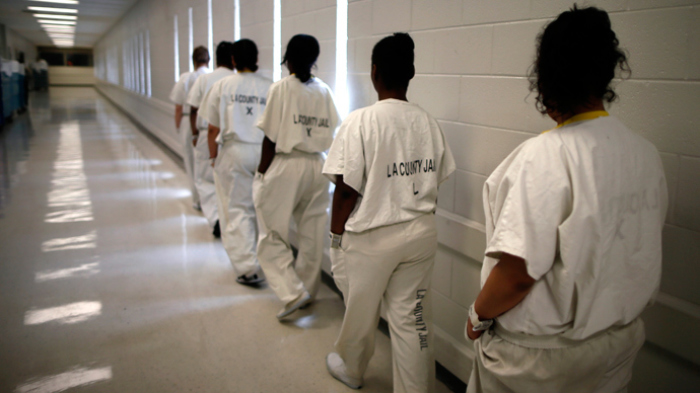
A federal judge has sided with two female inmates who sued a Texas prison that put them in physical danger by forcing them to be housed with male prisoners who identify as women.
In an order published Nov. 17, United States District Judge Sidney Fitzwater of the Northern District of Texas Fort Worth Division ruled that Federal Medical Center Carswell, a women’s prison in Fort Worth, cannot house trans-identified male inmates in women's housing units or allow them to enter women's showers, restrooms, changing areas and dormitory spaces.
Fitzwater, who was appointed to the bench by former President Ronald Reagan, directed FMC Carswell to either “reassign male inmates away from plaintiffs’ housing and privacy areas” or “house such inmates in a secure, segregated area at FMC Carswell (including the Hospital Unit or a comparable setting) that preserves access to programming and services while preventing access to female-only privacy areas.”
The ruling comes in response to a lawsuit filed by inmates Rhonda Fleming and Miriam Crystal Herrera on Nov. 4.
The complaint alleged that the Federal Bureau of Prisons’ policy allowing trans-identified male inmates to be housed in women’s prisons violates the plaintiffs’ rights under the Religious Freedom Restoration Act as well as the First, Fourth, Fifth and Eighth Amendments to the U.S. Constitution.
The plaintiffs said they have sincerely held religious beliefs that “individuals cannot choose their gender; that men cannot become women; and men and women practice modesty norms that prohibit men and women exposing or viewing one another’s nudity outside of marriage.”
In addition to raising concerns that forcing female inmates to share private spaces with men, which puts them in harm's way, amounts to cruel and unusual punishment in violation of the Eighth Amendment and characterizing the “violation of bodily privacy” as at odds with multiple constitutional protections, the lawsuit provided examples of trans-identified male inmates raping and sexually assaulting female inmates.
The complaint documented how one trans-identified inmate, “who is a convicted sex offender, routinely uses the women’s showers and has been observed frequently engaging in sexual activity with female inmates in the showers.”
Another trans-identified inmate allegedly “has ongoing sexual relationships with female inmates and has been observed sharing a cell naked and having sex with a woman who reportedly suffers from mental illness.”
A separate male inmate has harassed Fleming and denounced her as “full of hate.” That same inmate reportedly sexually assaulted a female inmate, telling her, “I’m not trans, I’m bisexual and everything works.” Herrera has alleged that a trans-identified male inmate has watched her shower, vowed to wait for her “in the bathroom after lights out” and has opened the shower door on her.
While President Donald Trump signed an executive order into law shortly after taking office earlier this year, calling for the U.S. Attorney General to “ensure that males are not detained in women’s prisons or housed in women’s detention centers,” the complaint maintains that “the Bureau of Prisons has failed and refused to implement" it at FMC Carswell.
At an event hosted by The Christian Post last year, “Unmasking Gender Ideology II,” Amie Ichikawa, the founder of the Woman II Woman ministry, said the experiences of female inmates at FMC Carswell are not isolated incidents.
Ichikawa, whose organization serves the needs of incarcerated women, discussed how female inmates have been raped by men who are allowed to be housed in women's prisons.
She specifically highlighted the case of Tremaine Carroll, whom she identified as one of “44 male-born individuals who have been successful in transferring into women’s prisons.” Carroll has been labeled one of the “Top 10 worst inmates in all of California.”
Sen. Tom Cotton, R-Ark., has introduced legislation titled the “Preventing Violence Against Female Inmates Act,” which seeks to prohibit the Bureau of Prisons from placing trans-identified male inmates in women’s federal prisons and withhold federal funds from states that refuse to comply with the measure.